One week into October, the peak month for the Berkshires to have its natural beauty on display, we’re happy to share these cellshots with you:


newberkshire.com
One week into October, the peak month for the Berkshires to have its natural beauty on display, we’re happy to share these cellshots with you:
– It is the job of literature to produce a fabric broad and deep enough to hold a people together. It must provide the flag a nation’s people rally around, with or without salutes and fanfares. To keep from sticking out like sore thumbs, the best writers only borrow enough from their elders and ancestors so that they blend in, yet remain fresh and distinct voices.
If Philip Nolan is The Man Without a Country, then perhaps America’s principle man of letters, Nobel laureate Bob Dylan, is a man without a generation? That would be because he was born a member of the last cohort to escape the naming-clutch of the consumer economy, which didn’t exist when he was born in May 1941, seven months before America was lured back into the wars of the old world.
If born a mere five years later, he’d have been branded a Baby Boomer, a term useful to people and companies with something to sell. The consumer economy was dreamt up to succeed the manufacturing economy that had sprung to the old world’s rescue twice in the span of 25 years.
Even an obscure reference such as Philip Nolan has relevance in an article on Bob Dylan, because there’s no aspect of the American story that he hasn’t woven into the tapestry of his own mythography.
Confederate poet Henry Timrod became the most famous advocate of slavery’s Lost Cause when Dylan quoted him in his song When the Deal Goes Down, on Modern Times (2006). For all we know, it was Timrod who had inspired Philip Nolan to enlist in Aaron Burr’s treasonous conspiracy?
But we digress – the question is whether Bob Dylan is a man without a generation? As soon as I write that, I wonder if I may have gotten off on the wrong foot? Given his “never-ending tour,” maybe the Thomas More story, A Man for All Seasons, would’ve been more apt?
No, that couldn’t work, because there are only four seasons, and it would be senseless to imagine Dylan as being divisible by four. What may make sense, however, is a literary mashup, such as declaring him to be “The Man for All Generations.”
Embarked as he is today on tour in support of Rough and Rowdy Ways, his 39th studio album, Bob Dylan has attracted paying customers from every generation named by the great American marketing machine. Now it makes sense.
Being pre-generational, Bob Dylan makes music that appeals to people of any and all generations!
And, as he told us in his memoir-adjacent book, Chronicles, Vol. 1 (2004), not only is he not a Baby Boomer, but it was the avant-garde of that cohort who impelled him to buy a rifle so he could protect his family from their rude and rowdy ways.
Perhaps you can see, now, how absurd is the label stamped on him by the popular media, and repeated by succeeding generations of the laziest writers in history – pop culture journalists. Bob Dylan is no more the spokesman for the Baby Boomers than he is for GenZ, iGen, or Centennials.
As he has been telling us since, at least, the 1965 San Francisco press conference, Bob Dylan is a song and dance man (more song than dance). He writes songs, then creates musical settings for them, then sells them. There is nothing easy about it, but it is that simple.
By Dave Read, July 29, 2023 – With USC poised to award its highest academic degree to someone* whose research concerns “menstruation in contemporary poetry,” I feel confident in my judgment that USC is ignorant of poetry’s crucial role in the American war of liberation.
 If my judgment is wrong, however, and that storied institution does know the value of poetry, then the judgment must be replaced by a prognosis that institutional madness has set in there. Maybe it’s just too hot and sunny in southern California?
Does the fact that the doctoral candidate limits the field of research to contemporary poetry imply that poets such as Emily Dickinson, Edna St. Vincent Millay, Marianne Moore, Elizabeth Bishop, and Sylvia Plath can be overlooked, or does it tell us that bodily functions are being nudged toward the limelight, for the delight and edification of the poetry audience?
Perhaps it will be this newly-minted professor’s mission to isolate a space for the proper consideration of “menstruation in contemporary poetry?” Please, can anyone tell me how to put dibs on the PH.D that equity, diversity, and inclusion would demand be set aside for “priapism in colonial poetry,” to name just one potentially related field?
How did we get to such an anti-intellectual place, where equity is valued over equality, where diversity and inclusion are valued over the traditional color-blindness of the goddess Justice and her sister Lady Liberty? Who says the time has come to forget the Civil Rights struggle’s goal of integration? Word on campus is that we need to embrace the far more sinister segregation that traps us in solitary silos of personal identification?
Two huundred fifty years later, only the poetry of Common Sense and The Declaration of Independence remain. The faulty logic and the historical inaccuracies employed by Thomas Paine and Thomas Jefferson have long since been deconstructed into a million pieces in every political science classroom in the world. And every time, the Red Coats lose again!
But, it wouldn’t matter even if William Shakespeare and Jonathan Swift had been there to produce rebuttals to America’s foundational literature. Once its poetry had seeped from the rational into the emotional part of their minds, American colonists were crazy enough to think they’d be able to defeat, with farm implements and hunting rifles, the most awful weapon of mass destruction history had ever seen – the British Empire, which otherwise did very good work to laicize much of higher ed!
*Rachel Neve-Midbar
By Dave Read, July 17, 2023 – The un-representative, un-elected leaders of American society, including, but not limited to, Gates, Bezos, Zuckerberg, and Musk, amount to a perfect imitation of King George and the parliamentarians who long ago flooded Boston with men in Red Coats. The king’s mercenaries were ordered to take up residence wherever convenient and to keep an eye on the colonists, especially those upset by the ways and means kings keep iron grips on their kingdoms.
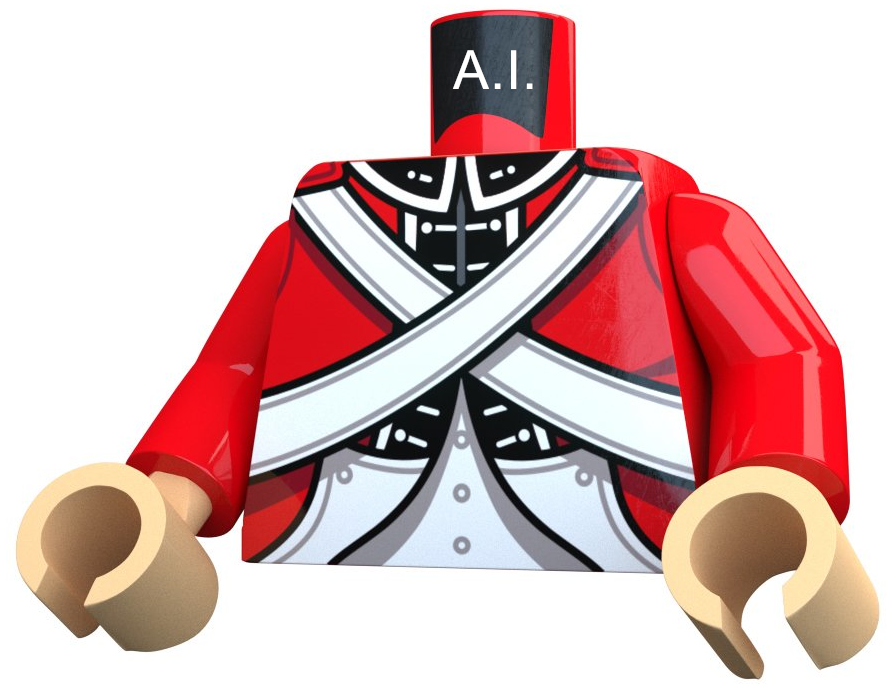
Today’s make-believe kings have flooded, not only Boston, but much of the world with secret recording devices, sold fraudulently as “smart speakers,” but which are used to train A.I. and to inform marketing departments and intelligence agencies what people talk about when they don’t think they are being recorded, much less eavesdropped on.
Whenever someone stops you on the street, or comes to you at home or school or work, and tells you they have come to assist you, if you aren’t alarmed, then you aren’t armed with an adequate understanding of human nature and how tyranny operates.
Although King George forced us to use them, the American War of Independence wasn’t won by the people with the best arms, it was won by the people with the best ideas and the ability to translate them into the spiritual pandemic that all the king’s horses and all the king’s men still haven’t found a cure for.
The sooner we remove fraud from the American marketplace, the sooner Americans will be restored to the degree of personal liberty they enjoyed at the end of the second world war, and which they have ceded bit by bit, digital byte by virtual bite ever since we lost faith in ourselves.
We squandered our well-deserved peace dividend when we began to act as if a free people would ever fall for the sales pitch of tyranny. Today, the only people afraid of communism/socialism are the geniuses of the Republican party, and elements of the other party who let them get away with it. No matter how dark the place one party has sunk to, the other is nearly as afraid of the sunshine of open, honest governance.
How soon after his death did we forget the brilliant admonition of President Franklin D. Roosevelt: “The only thing we have to fear is fear itself.” We allowed the academic-military-industrial complex, built for the prosecution of one war, to transition itself into the faceless tyrant that today has its own Red Coats stationed or hidden in every country on earth.
Our accidental slide into machine-aided tyranny will continue, and we won’t resume the way of life this nation was founded upon, unless we re-dedicate ourselves to Common Sense.
Go ahead and read the pamphlet, if you’d like; Gen. Washington ordered 25,000 copies and also had it read aloud to his soldiers, since many were barely literate. But, you already know where and how common sense must be applied: don’t vote for a liar or a thief, don’t vote for anybody who would cheat a customer, contractor, agency, or spouse.
Dave Read
– One can only imagine what Elvis Costello thinks about having his career critiqued by the most taciturn and most discriminating critic in the history of pop music, Bob Dylan. It would be of minimal concern if done via zine, vlog, or even newspaper, but Dylan’s take on his fellow showman appears in a big, fat, almost coffee-table-size book, The Philosophy of Modern Song.*

By burying his judgments in the silent tomb of a book, Mr. Dylan preserves them from being devoured by the odious thief, AI, which ingests every word spoken within range of a microphone hidden by Amazon, Apple, Google, Microsoft, and the other cannibals of pop culture.
Sure, his words eventually will be scraped by the machine and mangled into a million abuses, but, a thousand years from now, they’ll remain on the printed page precisely the way they appear today.
This being about Bob Dylan, we know better than to expect it to be simply a case of him deciding to single-out for praise his colleague’s big hit Pump It Up. Instead, the other shoe drops almost immediately – “At the point of Pump It Up, he obviously had been listening to Springsteen too much.”
Springsteen, who he? Oh yeah, Bruce Springsteen is the ultimate “next Bob Dylan!” So, why drag him into a little toast to Elvis Costello? Because that would give the thinking public something to contemplate – that vanishing cohort of people who’d rather think than swallow whole whatever mass media is produced for our consumption.
For Springsteen fans, this must sting, because none of the other 65 songs in the book is a Springsteen composition. Ouch! Just think about that – a sixtysix song survey of modern American song and it excludes the very popular hero of Asbury Park. Oh my.
“Don’t cry for me,” whispers Bruce, “I got me two Grammies for every one Bob Dylan has!”
Anyway, as if to demonstrate how like the hoi polloi he has become, there is an uncredited co-author for the piece on Costello’s song. The first section betrays the strong odor of AI authorship – it is a steaming cup of word soup, with cliche croutons tossed in for umami.
Then, following a spacious caesura, the second part sounds original and makes fresh observations – it very well may be written by Bob, but, even after 50+ years of applied Dylanology, I can’t be certain it is!
*The Philosophy of Modern Song is as much about philosophy as the first Bob Dylan book, Tarantula, is about arachnids.
Dave Read
– The vast sea of American literature springs from the Colonial literature that underwent a fundamental transformation during the interregnum of 1763-1775, as it became apparent that Americans would never reconcile themselves to the authority of the British monarch and parliament. Whatever fealty for England there was at the outset of the Colonial era was worn thin by the French and Indian War, then vaporized by the Stamp Act. It’s quick repeal is the poster child for the adage “Too Little, Too Late.”
Whatever else describes the motley colonial population, it had a general awareness that America was the start of something new, while England and Europe were ancient things, animated by ancient concepts and regimes. New England, New York, New Hampshire, Newport, New Haven – welcome to the new world.
Even cursory research into the origins of American literature pays handsome rewards almost immediately. And, right from the get-go, the twin themes of nature and her human partner are evident, in the earliest American prose and poetry. Rather than locate themselves somewhere along an ancient literary continuum, the first American writers wrote as if they were discovering a new world!
 These excerpts show the first American writers to be cheerful and big-hearted; they are content to go all-in on ordinary things, which devotion elevates and sanctifies them. In his Studies in Classic American Literature, D.H. Lawrence writes: “Franklin is the real practical prototype of the American, Crevecoeur is the emotional… Crevecoeur’s Letters are written in a spirit of touching simplicity, almost better than Chateaubriand. You’d think neither of them ever would know how many beans make five.”
From Letters of an American Farmer, by Hector St. John de Crèvecoeur
Thus divided by two interested motives, I have long resisted the desire I had to kill them, until last year, when I thought they increased too much, and my indulgence had been carried too far; it was at the time of swarming when they all came and fixed themselves on the neighbouring trees, from whence they catched those that returned loaded from the fields. This made me resolve to kill as many as I could, and I was just ready to fire, when a bunch of bees as big as my fist, issued from one of the hives, rushed on one of the birds, and probably stung him, for he instantly screamed, and flew, not as before, in an irregular manner, but in a direct line. He was followed by the same bold phalanx, at a considerable distance, which unfortunately becoming too sure of victory, quitted their military array and disbanded themselves.
By this inconsiderate step they lost all that aggregate of force which had made the bird fly off. Perceiving their disorder he immediately returned and snapped as many as he wanted; nay, he had even the impudence to alight on the very twig from which the bees had drove him. I killed him and immediately opened his craw, from which I took 171 bees; I laid them all on a blanket in the sun, and to my great surprise 54 returned to life, licked themselves clean, and joyfully went back to the hive; where they probably informed their companions of such an adventure and escape, as I believe had never happened before to American bees!
As if to demonstrate how near poetry is to the best prose, here is Philip Freneau’s, poem To A Honey Bee. In his benchmark, two volume Literary History of the American Revolution, Moses Coit Tyler wrote of Philip Freneau, “…a true man of genius, the one poet of unquestionable originality granted to America prior to the nineteenth century.”
Thou born to sip the lake or spring,
Or quaff the waters of the stream,
Why hither come on vagrant wing?—
Does Bacchus tempting seem—
Did he, for you, the glass prepare?—
Will I admit you to a share?
Did storms harrass or foes perplex,
Did wasps or king-birds bring dismay—
Did wars distress, or labours vex,
Or did you miss your way?—
A better seat you could not take
Than on the margin of this lake.
Welcome!—I hail you to my glass:
All welcome, here, you find;
Here let the cloud of trouble pass,
Here, be all care resigned.—
This fluid never fails to please,
And drown the griefs of men or bees.
What forced you here, we cannot know,
And you will scarcely tell—
But cheery we would have you go
And bid a glad farewell:
On lighter wings we bid you fly,
Your dart will now all foes defy.
Yet take not oh! too deep a drink,
And in the ocean die;
Here bigger bees than you might sink,
Even bees full six feet high.
Like Pharaoh, then, you would be said
To perish in a sea of red.
Do as you please, your will is mine;
Enjoy it without fear—
And your grave will be this glass of wine,
Your epitaph—a tear—
Go, take your seat in Charon’s boat,
We’ll tell the hive, you died afloat.